01 / Evidence
The Evidence Desk
Analyse a real archive photograph, a diary excerpt and a historical law. Separate observation, documented context and unsupported inference.
Open activity ↗Explore real stories, historical evidence and difficult questions. Make connections. Check what you see. Build your own understanding of the Holocaust.
A learning space for young people and educators · Suggested age: 14+ · Designed for guided classroom use.
Source-based activities with immediate feedback, historical context, and space for discussion and written reflection.
Analyse a real archive photograph, a diary excerpt and a historical law. Separate observation, documented context and unsupported inference.
Open activity ↗Recognise stereotyping, emotional pressure and missing evidence. Choose responsible ways to respond online.
Open activity ↗Explore constrained decisions in the Łódź ghetto and examine the roles, pressures and responsibilities of bystanders.
Open case study ↗Investigate documented objects, read children's voices and poetry in context, and connect statistics with individual lives.
Open activity ↗Explore traces of Jewish life, read buildings and memorials as historical sources, and develop a grounded memorial proposal.
Open activity ↗Explore Pavel Friedmann’s poem “The Butterfly” in the historical context of the Terezín ghetto, then create a clearly labelled contemporary response.
Open activity ↗Compare archival photographs, site documentation, police records and maps from Poland, Bulgaria and Romania. Evaluate provenance and limits.
Open source lab ↗Ready-to-use 45- and 90-minute lesson plans, an interactive timeline and map, glossary, source-analysis guide and curated archive directory.
Open resource hub ↗Match historical events to years in an activity created by the project partner in Romania.
Open partner activity ↗Listen to survivors and witnesses. Explore audio testimony, transcripts and podcasts, then investigate what a voice can—and cannot—tell us.
Explore oral stories ↗The activities connect historical sources and individual experiences with difficult questions about power, memory, evidence, and responsible civic life.
Short films, animated personal stories and archival material can open a door into deeper historical inquiry. Every item is linked to its source and context.
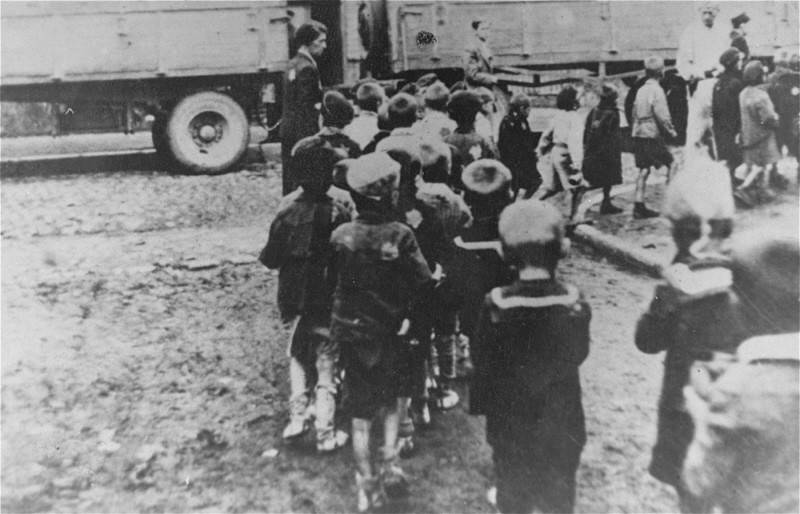
Start with what an archival image can show—and what it cannot. Read the museum caption before drawing conclusions.
View the original archive record ↗Three minutes of film footage from Nasielsk in 1938, showing Jewish life before the German invasion. A powerful starting point for seeing people as individuals, not statistics.
Short animated stories, 5–8 minutes each, based on testimony, diaries, letters and photographs held by the museum.
A 10-minute animated educational film about a fictional Jewish boy in Nazi Germany, representing experiences documented in many real stories.
Each activity is designed to take approximately 8–12 minutes individually, or 12–15 minutes in pairs. Follow it with a classroom conversation that invites questions, careful reasoning and respectful listening.